PURE-FOOD
HORIZON-CL6-2025-01
Grant agreement no. 101290562
Pollution understanding and reduction for environmental sustainability in the food and drink industries
In General
PURE-FOOD is a research and innovation project aimed at reducing pollution and improving environmental sustainability across the food and drink industry. Bringing together expertise in water treatment, pollution monitoring, ecotoxicity assessment, Best Available Techniques (BAT), and stakeholder engagement, the project addresses both conventional and emerging contaminants affecting water, air, and soil. Through six case studies across Europe and beyond, covering poultry, dairy, brewery, table olive processing, potato processing, and aquaculture, PURE-FOOD advances scientific knowledge, harmonised monitoring methods, and the demonstration of innovative pollution prevention and mitigation solutions. By fostering collaboration among researchers, industry stakeholders, and technology experts, the project supports healthier ecosystems, biodiversity protection, and more sustainable food production.
More Information
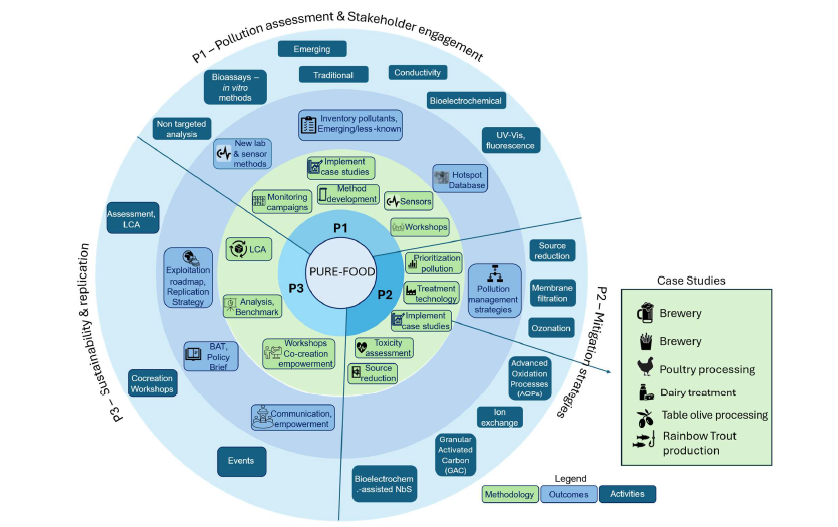
The PURE-FOOD project adopts a holistic and inclusive methodology that recognizes societal engagement and empowerment as critical components for achieving systemic change in the F&D sectors. The approach is based on the premise that scientific and technological developments, though a key part of the solution, are insufficient alone to address pollution and sustainability challenges without parallel efforts to raise awareness, foster behavioral shifts, and ensure the effective dissemination, communication and uptake of knowledge and solutions. This methodology is designed to contribute directly to the project’s objectives by ensuring that citizens, consumers, industry actors and public authorities are not only informed but also actively involved in shaping, testing, and adopting solutions developed throughout the project. The methodology is put into practice through the different CS that target F&D industry selected representative sub-sectors. The project is structured in three closely linked pillars, each one addressing complementary dimensions of the challenges necessary to reach the overall objective of the project:
Pillar 1 — Pollution assessment and stakeholder engagement (diagnostic science & baseline): Mapping of pollutants (traditional pollutants (BOD, COD, Total suspended solids (TSS), N, P) and pollutants not covered by BAT conclusions: EOF, MPs, emerging and less-known pollutants and microbial contaminants) from food and drink sector facilities, including both direct discharges and contributions to municipal wastewater, if applicable.
Pillar 2 — Mitigation solutions (source reduction strategies, technology development & optimization): This pillar comprises selection, co-design, integration and demonstration of tailored treatment and source-reduction interventions to lower post-treatment emissions with focus on priority emerging/less-known pollutants across a diversity of sub-sectors and facility sizes that constitute the case studies.
Pillar 3 — Case studies sustainability & replication (validation, impact assessment and scaling): This pillar aims to assess real-world sustainability (including environmental, economic, social aspects), provide information supporting future BAT guidance, and prepare replication and exploitation pathways across sectors and geographies for broad uptake of the identified approaches. A participatory and multi-actor engagement strategy that integrates co-creation processes, behavioral science, and strategic communication is central to the methodology adopted in PURE-FOOD.
AGENSO Contribution
Within PURE-FOOD, AGENSO contributes to the assessment, monitoring, and mitigation of pollution across the food and drink industry. Its activities include supporting the inventory of pollutants in collaboration with stakeholders, mapping environmental regulations and Best Available Techniques (BAT), and contributing to the development of shared indicators for pollution assessment. AGENSO also participates in activities to empower consumers and civil society and raise awareness of environmental impacts, as well as in developing methodologies for estimating key pollutants based on sensor data.
A key contribution of AGENSO is the development of a web-based digital tool that uses sensor data as input to display and visualise model outputs and estimate pollutant levels through a user-friendly interface. This tool will support the implementation of monitoring protocols and process sampling and will be demonstrated in the dairy industry case study at FrieslandCampina Hellas in Patras, Greece. AGENSO is responsible for IoT monitoring and digital tools within this pilot, which involves the treatment of approximately 5,000 m³ of effluent wastewater per year. In addition, AGENSO contributes to the operation and follow-up of treatment solutions, their performance and cost assessment, and the evaluation of deployed solutions against BAT conclusions and relevant EU regulations. Through these activities, AGENSO supports data-driven pollution monitoring, the validation of innovative treatment solutions under real-world conditions, and the advancement of more sustainable practices across the food and drink sector.
PURE-FOOD Basics
Pollution Assessment & Monitoring
Identification and mapping of conventional, emerging, and less-known pollutants across food and drink industry sectors.Innovative Mitigation Solutions
Development, optimisation, and demonstration of tailored pollution prevention, source-reduction, and treatment technologies.Sustainability & Impact Assessment
Evaluation of environmental, economic, and social impacts to support sustainable practices and future Best Available Techniques (BAT) guidance.Stakeholder Engagement & Replication
Co-creation with industry, citizens, consumers, and public authorities to promote knowledge sharing, solution adoption, and replication across sectors.Project Funding
- Starting date : September 1st 2026
- Duration : 48 Months
- Status : Running
- AGENSO participation type : Direct Beneficiary
- This project received funding from the European Union's Horizon Europe under Grant Agreement number 101290562.
countries
case studies
F&D sectors
partners
AGENSO Main Tasks
AGENSO contributes to identifying pollutants in the food and drink industry, mapping environmental regulations and Best Available Techniques (BAT), and developing shared indicators to assess pollution levels.
AGENSO contributes to developing methodologies for estimating key pollutants based on sensor data, supporting data-driven environmental monitoring and pollution assessment.
AGENSO will develop a user-friendly web-based tool that uses sensor data to estimate pollutant levels and visualise model outputs, making monitoring results accessible to users.
AGENSO leads IoT monitoring and digital tool activities in the dairy industry case study at FrieslandCampina Hellas in Patras, Greece, supporting the monitoring of a pilot treating approximately 5,000 m³ of wastewater annually.
AGENSO contributes to monitoring deployed treatment solutions and assessing their technical performance, effectiveness, and costs under real-world operating conditions.
AGENSO supports stakeholder engagement and environmental awareness activities while contributing to the assessment of treatment solutions against BAT conclusions and relevant EU environmental regulations.
News Related to the Project
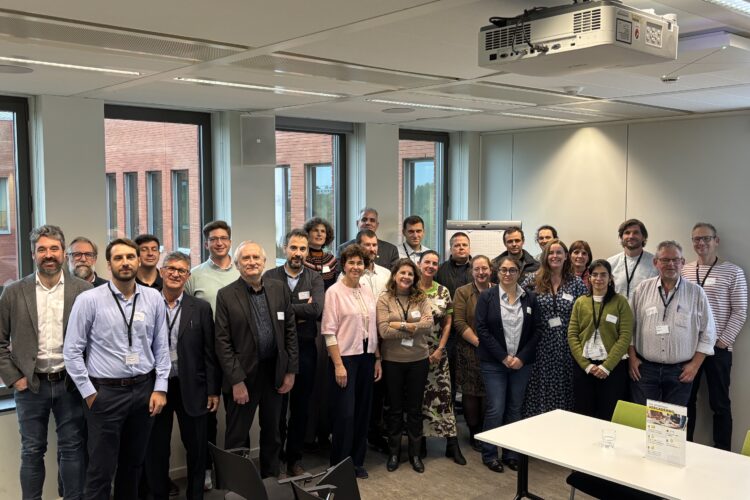
Kickoff meeting of the PURE-FOOD project
On 20–21 October 2026, the kick-off meeting of the PURE-FOOD project took place in Bruges, Belgium, hosted by VITO. The...
Featured Links
Partners